
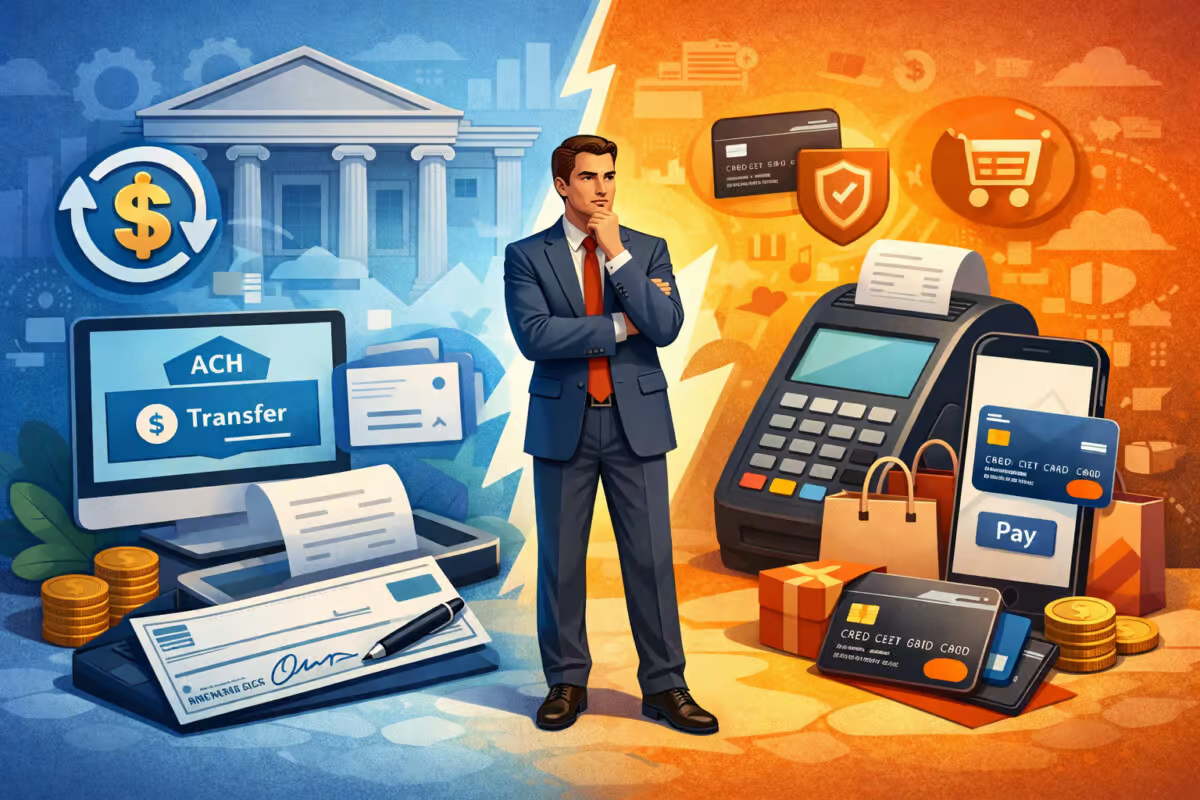
Choosing how your business gets paid is not a small decision. The payment methods you accept affect your costs, your cash flow, your customer experience, and even how much time your team spends chasing invoices or managing disputes.
That is why the question of ACH payments vs credit cards matters so much. For some businesses, ACH can reduce payment acceptance costs and make recurring billing more predictable.
For others, credit cards improve conversion, speed up checkout, and meet customer expectations in ways ACH cannot. In many cases, the best answer is not choosing one over the other, but knowing when each method works best.
This guide breaks down the real differences between ACH payments and credit cards in a practical, easy-to-follow way.
You will learn how each payment method works, where costs show up, how risk differs, and which option makes the most sense for invoices, subscriptions, ecommerce, service businesses, and B2B payments. By the end, you should have a much clearer idea of which payment mix fits your business model.
What ACH payments are and why businesses use them
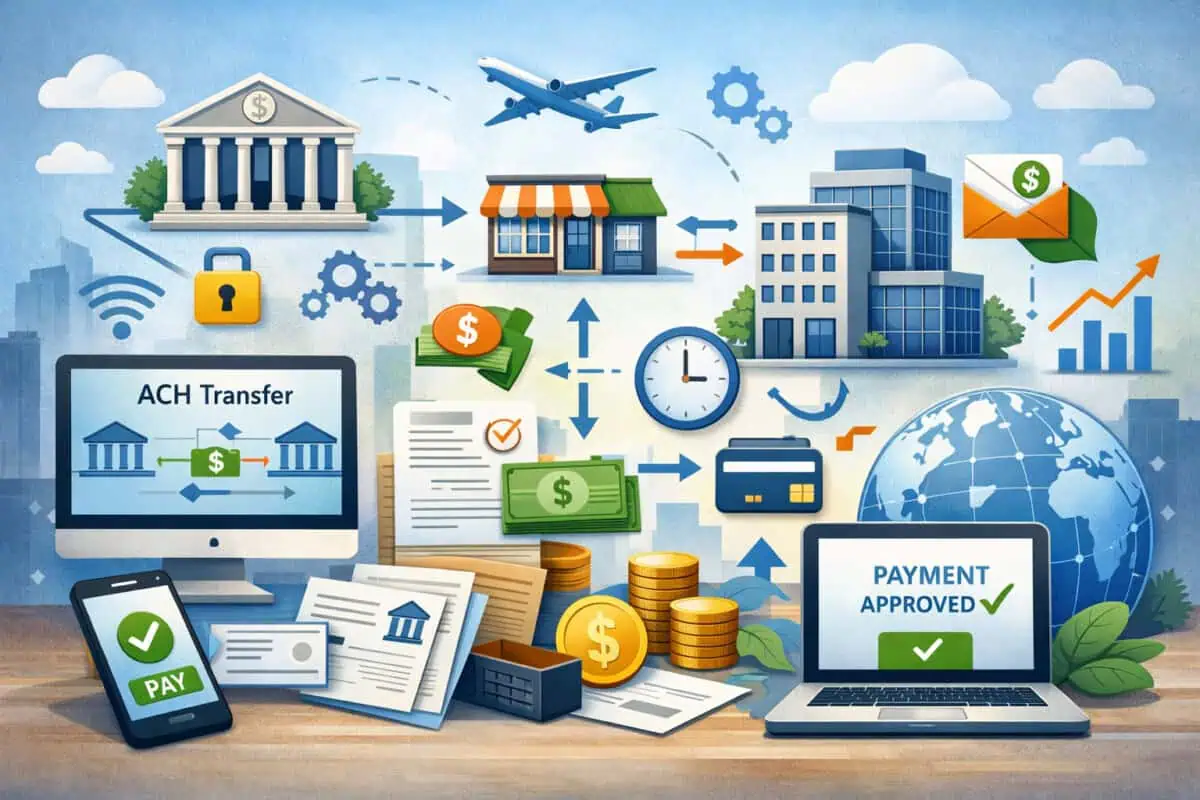
ACH payments are electronic bank-to-bank transfers that move funds through the Automated Clearing House network. Instead of a customer pulling out a card and entering card details, they authorize a payment directly from their bank account.
For businesses, ACH is often used for invoices, recurring billing, membership dues, installment plans, account-on-file payments, and larger transactions where card fees would take too big a bite out of revenue. It is also common in B2B environments where companies pay vendors, contractors, or service providers through bank transfers rather than cards.
ACH payments for business usually fall into two broad categories: ACH debits and ACH credits. A debit means your business pulls funds from the customer’s account with authorization. A credit means the payer sends funds to you from their bank account.
In practice, many businesses focus on ACH debits for billing because they create a more controlled payment flow.
Another reason businesses like ACH is predictability. When a customer agrees to pay directly from a bank account, there is often less friction tied to expired cards, card reissues, or spending limits. That can make ACH especially valuable for recurring transactions.
How ACH payments work in day-to-day business operations
A typical ACH transaction starts when a customer gives permission for a payment to be taken from their bank account. That authorization might happen through an online payment form, an invoice payment portal, a signed agreement, or a recurring billing setup.
Once the authorization is in place, the payment information is submitted through a payment processor or gateway that supports ACH. The transaction is then routed through the banking network, processed in batches, and eventually settled into the business bank account.
The process is not the same as a real-time card authorization, which is why ACH often feels slower even when it is more cost-effective.
From an operations standpoint, ACH can streamline accounts receivable. Businesses that send invoices often use ACH to reduce manual follow-up and encourage customers to pay directly from a bank account.
Many service businesses also use it for monthly retainers, automatic drafts, or larger one-time payments that would otherwise come with high card fees.
ACH is not always the easiest payment method for the first transaction. Customers may need to enter routing and account numbers or connect a bank account. But once that relationship is set up, repeat payments can become much smoother.
Common ACH use cases that make sense for businesses
ACH or credit cards for B2B payments is a common comparison because ACH tends to fit business-to-business transactions especially well. B2B invoices are often larger, less impulsive, and more tied to formal billing processes. In that environment, saving on percentage-based card fees can have a major impact.
ACH payments for business are also strong for recurring billing models. Think membership organizations, software subscriptions with annual or monthly invoices, property management, home services, professional services, healthcare billing, and education-related payments.
When the transaction is expected, planned, and not tied to an instant checkout moment, ACH often works well.
Service businesses also benefit. If you bill clients after work is completed, ACH can feel natural because the payment experience is more like approving an invoice than making a retail purchase. The same goes for businesses that collect deposits, installment payments, or regular account top-ups.
In contrast, ACH is usually less ideal for impulse purchases, in-person point-of-sale situations, or transactions where the buyer expects immediate payment confirmation and a familiar checkout flow. That does not mean ACH cannot be used there, but it is usually not the strongest fit.
For a deeper background on bank-based transactions, this guide to ACH payment processing is a helpful starting point.
What credit card payments are and why they remain dominant
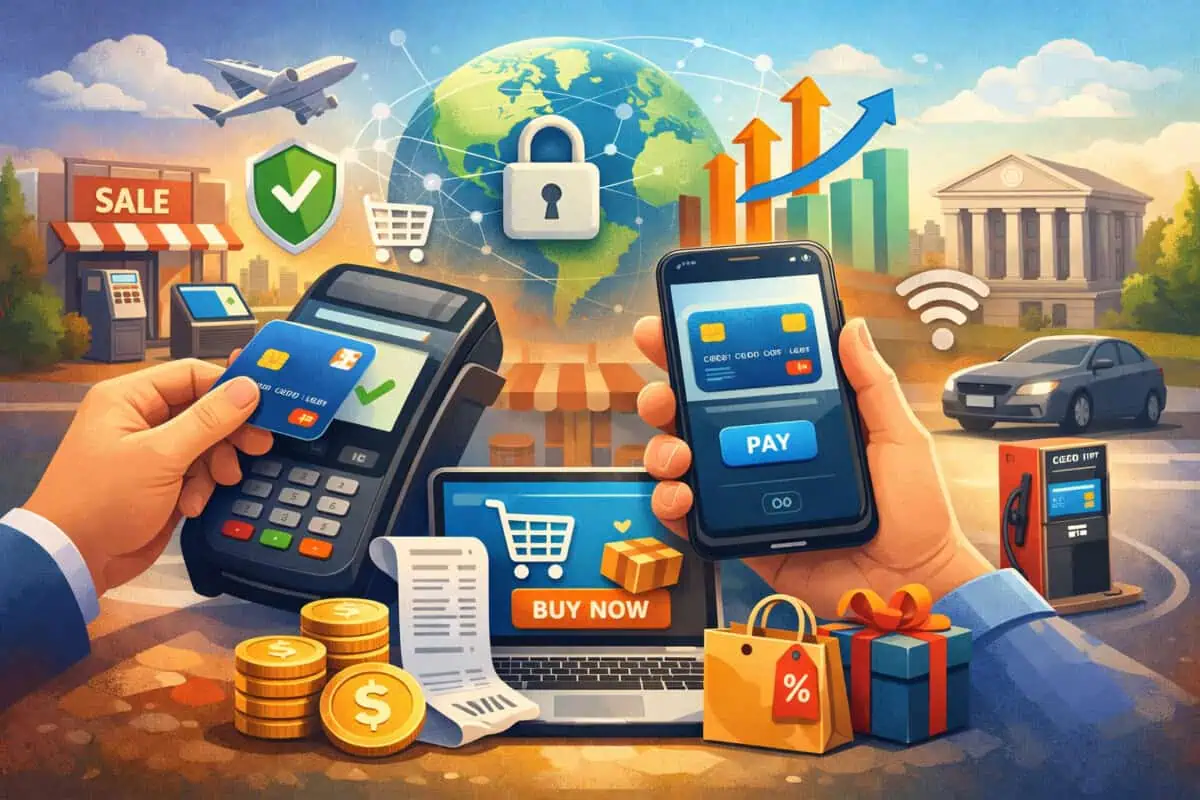
Credit card payments involve a customer using a payment card issued by a bank or card brand to complete a transaction. When the card is used, the transaction is authorized through card networks and the business eventually receives the funds after processing and settlement.
Credit card payments for business remain popular for one simple reason: convenience. Customers know how cards work, expect them to be accepted almost everywhere, and can complete a payment in seconds online, in-store, or through a mobile device. That familiarity reduces friction, which can directly affect sales.
From a business perspective, card acceptance supports fast checkout, broad customer preference, and a smoother experience for spontaneous buying decisions. Cards also allow businesses to support digital wallets, card-on-file billing, subscription payments, and omnichannel acceptance more easily.
The tradeoff, of course, is cost. Card processing usually involves percentage-based fees, possible per-transaction charges, equipment or gateway costs, and the ongoing risk of disputes and chargebacks. Still, many businesses accept those costs because cards help capture more revenue and create less customer resistance at the point of payment.
How credit card processing works behind the scenes
When a customer enters a card, taps a device, or swipes at a terminal, the transaction is sent for authorization. The payment processor, acquiring bank, card network, and card issuer all play a role in checking whether the transaction is approved.
If approved, the customer sees the payment go through right away, but the business does not usually receive the money instantly. The transaction enters the settlement process, and funds are then deposited according to the processor’s schedule. That can happen quickly, but it still involves a back-end flow beyond the initial approval.
ACH processing vs card processing is important here because cards give a faster customer-facing response. The buyer gets immediate confirmation, and the merchant knows the transaction was authorized. That creates confidence in retail, ecommerce, and service environments where payment needs to feel immediate.
At the same time, card processing comes with more moving parts around interchange, network rules, fraud tools, and compliance requirements. Businesses may not see every layer, but they feel the impact through fees, dispute policies, and technical setup.
Why customers often prefer paying by card
Customers are used to paying with cards. They often have saved cards in browsers, phones, ecommerce accounts, and subscription platforms. That means fewer steps, less typing, and more confidence when it is time to complete a transaction.
Credit cards also offer rewards, short-term financing flexibility, and built-in protections that many buyers value. When a customer is choosing between paying by bank account or by credit card, the card option may feel safer or more rewarding, even when it costs the business more.
This is especially true in consumer-facing industries. Online shoppers, restaurant guests, retail customers, and appointment-based clients often expect card payments to be available with no extra effort. If the experience is too slow or unfamiliar, conversion can drop.
That is one reason credit card payments for business remain essential even for companies that want lower payment processing costs. Customers often choose convenience first. If your payment setup ignores that reality, you may save money on fees while losing revenue at checkout.
How ACH and credit card processing differ from start to finish
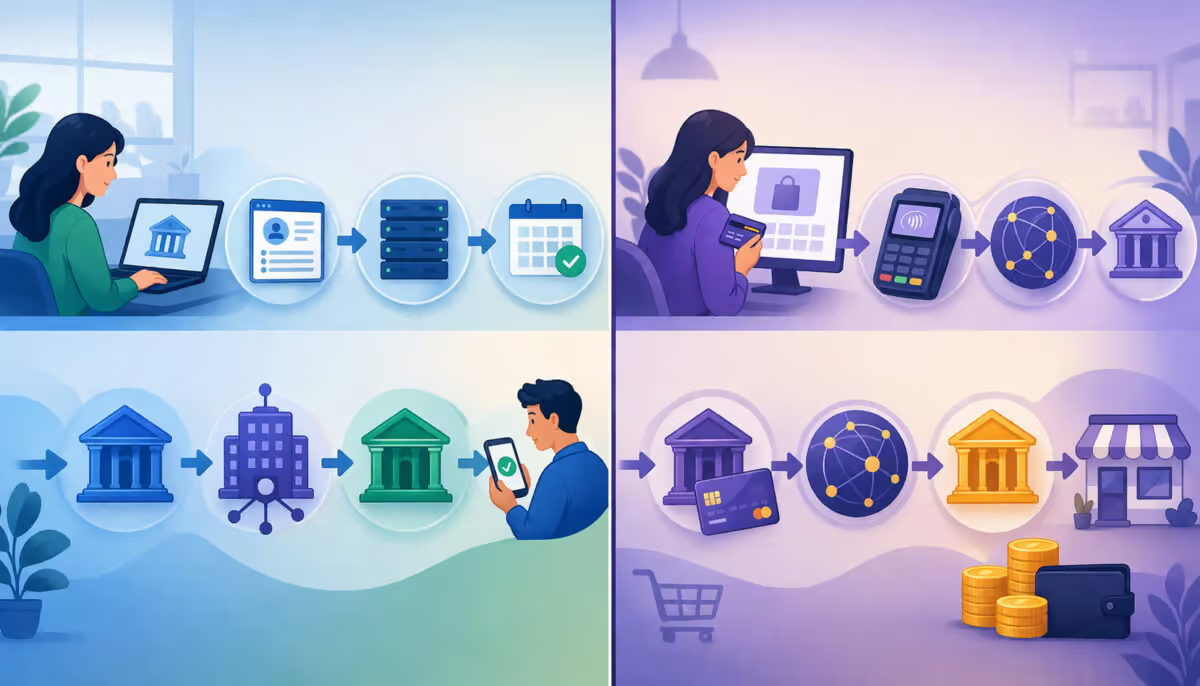
When businesses compare ACH vs credit card payments, they often focus only on fees. Cost matters, but the processing flow itself affects speed, staffing, failed payments, customer behavior, and back-office work.
ACH starts with bank authorization and usually moves through a batch-based transfer process. Credit cards start with instant authorization and then settle through card-processing rails. Those two systems create different business outcomes even when the customer is paying the same invoice amount.
ACH tends to be more deliberate. It works well when the buyer already expects to pay, when a billing relationship exists, or when the transaction is part of a routine. Credit cards tend to be more immediate. They work well when speed, familiarity, and easy acceptance matter most.
Understanding that difference helps avoid bad comparisons. A business should not judge ACH by the same standards as an impulse ecommerce checkout, and it should not judge cards by the same standards as high-value invoice collection.
The ACH workflow: authorization, batching, and settlement
In ACH processing, the customer authorizes a transfer from a bank account. Once the payment is initiated, it enters the banking system rather than moving through card rails. The business may not know the final outcome the instant the payment is submitted, especially compared with the instant response cards provide.
This slower workflow affects expectations. Businesses using ACH need to think about payment timing, internal posting procedures, and how soon they treat a transaction as truly cleared. For example, a business may wait before releasing goods, extending additional credit, or marking a balance as fully settled.
That does not make ACH unreliable. It simply means the process is structured differently. For recurring billing, invoice collection, and planned payments, that difference is often manageable and worth the savings.
ACH is also more sensitive to account issues like insufficient funds, incorrect bank details, revoked authorization, or return conditions. Those issues need process controls, especially for businesses that rely heavily on bank payments.
The card workflow: authorization, capture, and potential disputes
Credit card processing starts with authorization. The system checks the card, available credit, and fraud-related factors in near real time. That immediate approval makes cards ideal when the business needs an instant answer.
After the authorization, funds move through settlement and are eventually deposited to the merchant. While the customer sees a fast and simple payment experience, the business still deals with behind-the-scenes factors like interchange, processor markups, fraud screening, and dispute handling.
The biggest operational difference comes later if something goes wrong. Card transactions carry chargeback risk. A customer can dispute the payment, and the business may need to provide evidence to defend it. That creates costs beyond the original processing fee.
In other words, cards are often easier upfront and harder later if disputes occur. ACH can be a bit harder upfront and steadier later, depending on the use case and authorization quality.
ACH payments vs credit cards: the key differences that matter most
A useful payment method comparison for businesses should focus on the issues that actually affect operations. The biggest differences usually come down to cost, speed, risk, convenience, and fit for specific transaction types.
ACH is often the lower-cost option, especially for large invoices and recurring payments. Credit cards are often the more convenient option, especially for fast checkout and consumer-facing transactions. The real decision is about tradeoffs, not absolutes.
Below is a practical side-by-side comparison that highlights the most common business considerations.
| Factor | ACH Payments | Credit Cards |
| Typical cost structure | Usually lower flat or low-cost fees | Usually percentage-based fees plus transaction costs |
| Best for ticket size | Strong for larger invoices | Strong for small to mid-sized purchases |
| Customer setup | Requires bank account entry or authorization | Familiar and fast, often with saved payment details |
| Payment confirmation | Not always instant in the same way cards are | Immediate authorization response |
| Settlement feel | More delayed and batch-oriented | Faster from the customer’s point of view |
| Risk profile | Returns, failed drafts, authorization issues | Fraud, disputes, chargebacks |
| Recurring billing | Very strong for stable account-on-file billing | Strong, but affected by expired or replaced cards |
| Ecommerce checkout | Usually less ideal for impulse buying | Usually best for conversion |
| B2B invoices | Often excellent | Can be costly on large amounts |
| Customer incentives | Few consumer rewards | Rewards, familiarity, and short-term financing often help adoption |
This table shows why there is no universal winner in the ACH payments vs credit cards debate. The better choice depends on what your business sells, how customers prefer to pay, how large your average transaction is, and how important cost control is compared with checkout convenience.
Cost difference: where businesses usually notice the gap first
The most obvious difference between ACH and cards is cost. Credit card payments for business usually include percentage-based processing fees, which means larger transactions become more expensive very quickly. ACH, by contrast, often uses a lower-cost structure that is much easier to absorb.
That matters a lot for high-ticket sales. A business sending a $5,000 invoice may see a big difference between a bank payment and a card payment. The larger the transaction, the more noticeable the cost gap becomes. That is why ACH or credit cards for B2B payments is such a common decision point.
For small-ticket purchases, the difference may matter less. If a customer is spending a modest amount and the card option helps close the sale instantly, the higher fee may still be worth it. The key is to compare total economics, not just headline fees.
It is also smart to think beyond processing rates. Payment acceptance costs include failed-payment follow-up, dispute work, staff time, software, and how fast money becomes usable. A lower fee on paper is only part of the picture.
Speed and cash flow: the difference between approval and usable funds
Many business owners think cards are always faster and ACH is always slower. That is too simplistic. Cards usually provide faster authorization and a more immediate payment experience, which helps with order confirmation and customer confidence.
ACH often takes longer to fully settle, which can affect how quickly a business treats the money as available.
For cash flow, this distinction matters. If your business needs immediate confirmation before shipping, starting work, or releasing inventory, card processing may fit better. If your business can plan around a billing cycle and is more focused on lower payment processing costs, ACH may still be the stronger option.
The answer depends on your operating model. Contractors, agencies, wholesalers, and recurring-billing businesses may find ACH timing acceptable because payments are scheduled and expected. Ecommerce merchants or hospitality businesses may need the instant nature of card approvals.
Pros and cons of ACH payments for businesses
ACH can be a powerful tool for reducing costs and improving billing efficiency, but it is not perfect. Businesses sometimes switch into ACH expecting it to solve every payment problem, only to discover that customer adoption, settlement timing, and returns still need management.
The strongest ACH use cases share a pattern: planned payments, repeat customers, larger amounts, and billing relationships with a higher level of trust. When those conditions exist, ACH can reduce friction over time and support a healthier payment operation.
Still, ACH should be evaluated honestly. It can save money, but savings alone do not guarantee a better payment experience or better collection rates. The fit has to match the way your customers buy.
Advantages of ACH payments for business
The biggest advantage of ACH is cost control. Businesses looking for lower payment processing costs often move at least some transactions from cards to ACH because percentage-based fees can quickly become painful as invoice size grows.
ACH can also improve recurring billing stability. Cards expire, get replaced, hit limits, or get blocked by fraud filters. Bank accounts do not work exactly the same way, so recurring ACH drafts can reduce some of that maintenance burden. For subscription-style billing and scheduled payments, that consistency is valuable.
Another major advantage is fit for invoicing and accounts receivable. ACH supports a more invoice-friendly payment flow, especially when customers are already comfortable paying from a business bank account.
That makes it a strong option for wholesalers, service providers, consultants, medical practices, education providers, and membership organizations.
Additional ACH benefits often include:
- Better economics on larger transactions
- Strong fit for B2B payments
- Useful for recurring billing and autopay
- Reduced dependency on card limits or card expiration
- Good alignment with invoice-based payment collection
For businesses exploring the mechanics in more depth, this article on how ACH payments work offers useful context.
Drawbacks and limitations of ACH payments
ACH is not as frictionless for many customers, especially on a first payment. Entering bank details feels less familiar than using a saved card. Some customers hesitate because they do not want to share routing and account information, while others simply prefer the convenience and perks of cards.
Settlement timing is another limitation. ACH is not the best option when your business depends on immediate payment confirmation. If you need a fast yes-or-no answer before releasing goods or completing a checkout flow, cards often perform better.
There is also the issue of returns and failed payments. A transaction can run into insufficient funds, invalid account details, authorization problems, or other return scenarios. These are different from chargebacks, but they still create work and can disrupt cash flow if your processes are not tight.
ACH also tends to be weaker in high-conversion consumer checkout environments. While it can work in ecommerce or online billing, it usually requires more customer intention. That makes it better for committed payments than for impulse purchases.
Pros and cons of credit card payments for businesses
Credit cards remain the default payment experience in many industries for good reason. They are familiar, flexible, and easy to use almost anywhere. If your business depends on convenience, fast checkout, and broad customer acceptance, cards are hard to replace.
At the same time, the costs and risks can stack up. Businesses sometimes accept cards because everyone else does, but never stop to ask whether certain transaction types would be better handled through ACH or another bank-based method.
That makes ACH vs credit card payments an especially important comparison for businesses with growing volume or large-ticket sales. Cards can drive revenue, but they may also increase payment acceptance costs more than necessary if used for every scenario.
Why credit card payments help sales and customer convenience
The biggest benefit of cards is ease of use. Customers already know what to do. They can enter a number, tap a phone, save a card on file, or click a stored payment method and complete the transaction quickly.
That matters a lot in sales environments. A smooth payment flow reduces abandonment, supports impulse buying, and makes customers more likely to finish the transaction. This is especially important for ecommerce, retail, hospitality, and any business where convenience drives conversion.
Credit cards also offer flexibility for customers. They may prefer to manage cash flow through a billing cycle, earn rewards, or use the card’s dispute protections. While those benefits are customer-focused, they influence payment behavior in ways businesses cannot ignore.
Other common strengths of credit card payments for business include:
- Fast, familiar checkout
- Strong support for online and in-person payments
- Good fit for digital wallets and modern checkout tools
- Higher customer adoption in consumer-facing settings
- Immediate authorization for order confirmation
The downsides of card processing businesses should not ignore
The most obvious downside is cost. Percentage-based pricing means card fees rise along with transaction size. For businesses with slim margins or large invoices, those costs can become one of the most frustrating parts of payment processing.
Chargebacks are another serious issue. A customer dispute can result in lost revenue, added fees, operational headaches, and documentation work. Even when a business believes the transaction was valid, defending a chargeback takes time and is not always successful.
Cards also bring fraud risk, especially in card-not-present environments like ecommerce and remote billing. Businesses need tools, monitoring, and policies to reduce that risk. Those tools are useful, but they can add complexity and expense.
Finally, recurring card billing has a hidden weakness: cards change. Expired cards, replacement cards, closed accounts, and fraud-related reissues all create failed payments that require customer outreach. That can increase involuntary churn for subscription businesses.
Which option usually has lower costs for businesses?
If your main goal is lower payment processing costs, ACH is often the better choice. That is especially true for larger invoices, repeat billing, and B2B transactions where card fees can consume a noticeable share of each payment.
But the full answer depends on your average ticket size, payment frequency, margins, and how customers actually behave. Cost should be calculated across the entire payment lifecycle, not just the original processing rate.
A business that saves a lot on ACH fees but sees slower collections or lower customer adoption may not come out ahead. On the other hand, a business paying card fees on large routine invoices may be leaving money on the table month after month.
Why ACH often wins on pure processing economics
ACH generally avoids the same percentage-driven cost structure that makes cards expensive at higher transaction values. That means the bigger the invoice, the more attractive ACH tends to look from a cost standpoint.
This is one reason ACH payments for business are common in accounts receivable workflows. A company that bills $2,000, $5,000, or $10,000 at a time often has strong motivation to steer those payments toward bank transfer rather than card rails.
It is also why service firms, wholesalers, property-related businesses, and subscription providers frequently prefer ACH for larger or recurring billing events. Over time, even a moderate difference in fees can significantly improve margin.
If you are weighing broader business payment options, it helps to look at payment cost by customer segment and invoice size rather than averaging all transactions together. That usually reveals where ACH creates the most savings.
Hidden cost factors that change the real comparison
Processing expenses are not just the fee line on your statement. It also includes the labor involved in collecting payment, the likelihood of disputes, the impact of failed transactions, and how quickly you can use the money.
For example, a card payment may cost more but close faster and require less customer education. An ACH payment may cost less but require a better authorization process and more planning around settlement. Neither picture is complete without considering those tradeoffs.
Businesses should also look at these hidden cost areas:
- Time spent managing chargebacks
- Time spent resolving ACH returns or bank detail issues
- Lost revenue from checkout abandonment
- Delayed collections from limited payment choices
- Software or integration costs tied to each method
- Customer service effort around failed recurring payments
A smarter payment method comparison for businesses looks at net operational cost, not just the stated transaction fee.
Which option is better for speed, settlement, and cash flow?
Speed can mean two different things in payments. It can mean how quickly the customer sees an approval, or it can mean how quickly your business can confidently use the funds. ACH and credit cards perform differently on both.
Cards generally win the customer-facing speed test. Buyers expect instant confirmation, and businesses can move forward with the transaction right away. ACH often feels slower because it is tied to bank-based movement and settlement timing rather than instant card authorization.
But cash flow is not only about speed. It is also about predictability. In some business models, scheduled ACH drafts produce steadier collections than waiting for customers to pay by card when they remember.
When credit cards are better for immediate payment needs
If your business depends on real-time checkout, instant order approval, or immediate service activation, credit cards are usually the better fit. Ecommerce is the clearest example. Customers want to click, pay, and receive confirmation without delay.
The same goes for in-person retail, restaurants, ticketing, same-day appointments, and other quick-turn transactions. In those situations, the faster and more familiar card experience helps protect conversion and customer satisfaction.
Cards also help when your team needs quick certainty. If inventory will be shipped right away or staff will start work immediately after payment, instant authorization supports faster fulfillment decisions.
That does not mean cards solve every cash-flow issue. Chargebacks and refunds can still affect the final economics. But for immediacy, cards have the edge.
When ACH supports healthier cash flow over time
ACH can support better cash flow in businesses built around planned billing. If invoices go out on a consistent cycle and customers are set up for bank payments, collections may become more reliable and less dependent on manual reminders.
This is especially useful for recurring services, retainers, installment plans, and B2B accounts where customers are not making a spontaneous buying decision. Instead, they are satisfying an expected obligation. In that context, ACH’s lower cost and routine structure can support stronger long-term cash flow.
Another advantage is that ACH can reduce card-related payment failures in recurring billing, such as expired cards or reissued account numbers. For businesses with predictable billing cycles, that stability matters.
A useful way to think about it is this: cards often improve speed at the point of sale, while ACH often improves efficiency in the billing relationship.
Risk differences: fraud, disputes, chargebacks, returns, and failed payments
Risk is one of the most misunderstood parts of ACH processing vs card processing. Businesses sometimes assume ACH is always safer because it avoids traditional card fraud, or that cards are safer because they authorize instantly. The truth is more nuanced.
Each method has a different risk profile. Credit cards are closely associated with fraud screening, disputed transactions, and chargebacks. ACH is more associated with authorization quality, returns, insufficient funds, and account-related issues.
The key is not which method has zero risk. It is which method creates the type of risk your business is best equipped to manage.
Card risks: chargebacks and fraud pressure
Credit card risk tends to be more visible. A customer can dispute a transaction, and the business may have to prove the sale was valid. That means documentation, tracking, and sometimes a direct revenue loss even when the business believes it did everything correctly.
Card-not-present transactions can also attract fraud attempts. Businesses selling online or remotely need tools like AVS checks, CVV validation, device data, behavioral analysis, and order-review workflows to reduce exposure.
Chargebacks can be especially painful because they do not only affect a single transaction. Too many disputes can increase costs, create monitoring problems, or damage processor relationships. This is one reason some invoice-based businesses prefer ACH over cards when possible.
Still, cards are not automatically bad from a risk standpoint. Many businesses manage card risk effectively with strong fraud tools and clear fulfillment records. The issue is knowing that the risk exists and pricing it into your operating decisions.
ACH risks: returns, insufficient funds, and authorization issues
ACH risk looks different. Instead of classic chargebacks, businesses often deal with returned transactions, failed drafts, or problems tied to customer authorization and bank account status.
If a customer’s account lacks sufficient funds, the payment may be returned. If the account information is incorrect, the transaction may fail. If the authorization process was weak or poorly documented, the business may have trouble resolving a dispute or defending the validity of the draft.
These risks are manageable, but they require process discipline. Good ACH workflows depend on clear authorization language, strong recordkeeping, accurate customer information, and sensible timing for drafts.
For recurring billing, ACH failures may be easier to recover from than card-related failures caused by expired or replaced cards. But businesses still need retry rules, communication plans, and internal controls.
Customer convenience and the payment experience
Customer preference can dramatically affect which payment method performs better. Even if ACH is cheaper, it will not help much if customers are reluctant to use it. Even if cards are more expensive, they may still produce more completed payments because they feel easier.
That is why a good payment method comparison for businesses should include the buyer’s perspective. How many steps does payment take? Does the customer already know the process? Is the method familiar, trusted, and easy to repeat?
For some industries, convenience is the deciding factor. For others, the amount due and the business context matter more than checkout speed.
Why credit cards usually feel easier to customers
Most customers are already trained to use cards. They know how to tap, swipe, click, or autofill. Cards also integrate cleanly into ecommerce checkouts, digital wallets, mobile experiences, and account-on-file systems.
This ease reduces hesitation. It is especially valuable when the buyer is making a fast decision or when the sale could be lost if payment feels cumbersome. That is why cards remain the top choice in many consumer-facing settings.
Customers may also prefer cards because they want points, cash back, or purchase protections. Those incentives matter, even when the business would rather avoid the cost.
When ACH still offers a strong customer experience
ACH can still provide an excellent experience when the payment context is right. If the customer is paying an invoice, enrolling in autopay, handling a larger bill, or making a routine business payment, bank transfer often feels reasonable and efficient.
The experience improves even more when ACH is built into a clean digital workflow. Secure payment links, saved bank account details, recurring authorization, and clear invoice instructions can make ACH feel simple rather than burdensome.
The biggest mistake businesses make is assuming ACH must replace cards everywhere. It usually works better as a strong option in the right contexts, not as a forced substitute in every customer journey.
For businesses considering multiple acceptance methods, this overview of ways to accept payments can help frame the broader decision.
ACH vs credit cards for recurring billing, invoices, ecommerce, B2B, and service businesses
The best way to decide between ACH and cards is not to ask which one is universally better. Ask which one is better for the specific transaction type your business handles most often.
A recurring subscription business has different needs than an online store. A professional services firm billing monthly invoices has different priorities than a restaurant or salon. Matching payment type to business model is where smart payment decisions happen.
Recurring billing, invoices, subscriptions, and B2B payments
ACH often shines in recurring billing and invoice-driven workflows. If customers are paying the same business repeatedly, setting up bank-based payments can reduce long-term friction and control payment acceptance costs.
That makes ACH particularly strong for subscriptions with committed users, monthly retainers, tuition-style billing, installment plans, and B2B invoices. In B2B settings, customers are usually more comfortable paying from a bank account, especially when invoice amounts are large enough to make card fees unattractive.
Recurring ACH can also reduce failures tied to expired or reissued cards. For businesses that rely on stable, ongoing collections, this can improve retention and reduce administrative work.
Cards still have a role here. Some customers want the convenience and rewards of paying by card, and some businesses want instant authorization. But for recurring billing and invoice collection, ACH often has a cost and efficiency advantage.
Ecommerce, retail, and customer-facing service businesses
Credit cards are usually the stronger fit for ecommerce and fast customer-facing transactions. Online shoppers expect a smooth checkout with cards, digital wallets, and saved payment credentials. Any extra friction can reduce conversion.
Retail and point-of-sale businesses face the same reality. Customers expect to pay quickly and move on. Cards match that expectation. In many service businesses, cards are also useful because they allow payment at the moment work is completed or during appointment booking.
That said, service businesses can benefit from both methods. A contractor, medical office, legal practice, or home-services provider may use cards for deposits and convenient same-day payments, while encouraging ACH for larger final invoices or recurring billing plans.
This is often the smartest model: use cards where speed and ease matter most, and use ACH where cost control and billing efficiency matter more.
For businesses evaluating bank-payment acceptance in more detail, this guide to ACH and eCheck services adds useful context around when pay-by-bank options make operational sense.
When ACH is the better choice for your business
ACH is usually the better choice when the transaction is planned, the amount is meaningful, and the customer relationship is stable enough to support bank-based billing. In those conditions, ACH can deliver lower costs, smoother recurring collections, and stronger invoice economics.
Businesses that benefit most from ACH often include wholesalers, consultants, agencies, contractors, healthcare providers, property-related businesses, education providers, membership organizations, and subscription companies with established customer relationships.
ACH is also attractive when your team wants to reduce reliance on card fees for larger amounts. If you look at your monthly processing costs and feel that percentage-based fees are eating into margin, ACH deserves serious attention.
Clear signs ACH should play a major role in your payment mix
ACH may be the better choice if several of these are true:
- Your average transaction size is high
- You send invoices rather than relying on impulse checkout
- You handle recurring billing or scheduled drafts
- You work with business customers or long-term clients
- You want lower payment processing costs
- You can manage a slightly slower settlement flow
- You want to reduce problems caused by expired cards
In these scenarios, ACH payments for business can do more than save money. They can improve the structure of how you collect money in the first place.
When credit cards are the better choice for your business
Credit cards are usually the better choice when payment needs to be quick, familiar, and frictionless. If your business depends on real-time checkout or broad consumer acceptance, cards often win even when they cost more.
This is especially true in ecommerce, retail, food service, hospitality, event sales, and appointment-based businesses where customers expect instant payment confirmation. In those industries, convenience is directly tied to revenue.
Cards are also valuable when customers may not be ready to share bank details or when they strongly prefer rewards, financing flexibility, or saved-payment convenience.
Clear signs credit cards should remain central to your payment strategy
Credit cards are likely the better choice if these conditions match your business:
- Your sales depend on easy checkout
- Customers buy on impulse or make fast decisions
- You sell online and care deeply about conversion
- You accept a lot of in-person payments
- Your average ticket is modest enough that fees are tolerable
- Customers expect digital wallet and card-on-file options
- You need instant authorization before fulfillment
For many businesses, cards are not just a payment type. They are part of the sales process. That is why replacing them completely with ACH is often unrealistic.
When offering both payment methods makes the most sense
In many cases, the smartest answer to ACH payments vs credit cards is not choosing one winner. It is designing a payment mix that fits how different customers and transaction types behave.
Offering both methods gives customers choice while allowing your business to guide payment behavior where it matters most. You can keep the convenience of cards for fast checkout and still promote ACH for large invoices, recurring billing, and cost-sensitive transactions.
This approach works especially well for businesses with mixed sales channels or mixed ticket sizes. For example, a service company might take cards for booking and deposits, then encourage ACH for final balances.
A software company might allow both but highlight ACH for annual plans. A wholesaler might accept cards for small orders and ACH for standard invoice terms.
How to build a practical payment mix without confusing customers
The key is thoughtful presentation. Do not dump every option into one cluttered payment screen with no guidance. Instead, make the right method easy in the right context.
For example:
- Use cards as the default on ecommerce checkout pages
- Feature ACH prominently on invoice payment pages
- Offer ACH autopay for recurring accounts
- Explain payment choices clearly in onboarding and billing emails
- Encourage ACH for higher-value balances without making cards impossible
The goal is to shape behavior, not force it. Businesses that handle this well often lower costs without hurting conversion.
How to choose the right payment mix for your business model
Choosing between ACH and cards becomes easier when you stop asking broad questions and start looking at your actual data. Your average ticket size, customer type, sales channel, billing cycle, and margin structure all matter.
The right answer for a local service provider may be different from the right answer for a wholesale distributor or an online store. There is no single formula, but there is a practical evaluation process that works well.
Questions every business should ask before deciding
Start with these questions:
- What is your average transaction size?
- Are your payments mostly one-time, recurring, or invoice-based?
- Do customers pay at checkout or after receiving a bill?
- How sensitive are you to percentage-based processing costs?
- Do customers expect instant approval and checkout ease?
- How often do you deal with chargebacks or recurring payment failures?
- Would customer adoption drop if ACH were encouraged more strongly?
When you answer those honestly, the best path usually becomes clearer. Businesses focused on margin and invoicing often lean more heavily toward ACH. Businesses focused on conversion and customer convenience often lean more heavily toward cards.
A simple framework for deciding
A practical way to think about it is:
- Use ACH for large, planned, repeat, or invoice-driven transactions
- Use credit cards for fast, customer-driven, convenience-first transactions
- Use both if your business has different payment situations that need different tools
This framework avoids oversimplifying the choice. It also helps ensure you are not overpaying for card processing where bank payments would work just as well.
Common mistakes businesses make when comparing payment methods
Many businesses make the ACH versus card decision based on assumptions rather than actual operational needs. That leads to poor setups, missed savings, or checkout friction that did not need to happen.
A better comparison looks at costs, customer behavior, risk, and business model together. It also avoids expecting one payment method to do everything equally well.
Mistake 1: Comparing fees without comparing revenue impact
A business might see that ACH is cheaper and conclude that ACH should replace cards everywhere. But if customers prefer cards and conversion drops, the cheaper method may cost more in lost sales than it saves in processing fees.
The reverse can also happen. A business may keep taking cards for every invoice because it seems easier, while ignoring the mounting cost of percentage-based processing on large routine payments. In that case, convenience hides a major margin problem.
Mistake 2: Ignoring customer context and payment intent
Not all transactions are the same. A recurring invoice is not the same as an ecommerce cart. A B2B customer paying a scheduled bill is not the same as a first-time online shopper.
When businesses ignore those differences, they end up with payment flows that work poorly for everyone. The better approach is to match the payment method to the context.
Mistake 3: Underestimating operational risk
Some businesses focus so much on fees that they forget risk management. Cards can bring chargebacks and fraud costs. ACH can bring returns and authorization issues. Both require process quality.
The goal is not to avoid every problem. It is to build a payment system your team can manage with confidence.
Mistake 4: Failing to revisit the payment mix as the business grows
A payment setup that worked when your business was smaller may stop making sense as invoice size, customer mix, or recurring revenue grows. Many businesses keep old payment habits long after their economics have changed.
Reviewing your payment mix regularly can uncover quick wins. You may not need a complete overhaul. Sometimes a simple shift, like steering large invoices toward ACH, makes a meaningful difference.
Frequently Asked Questions
Helpful answers about ACH payments vs credit cards for businesses.
Is ACH always cheaper than credit card processing?
ACH is often cheaper, especially for larger invoices and recurring payments, but not every business saves the same amount. The actual difference depends on provider pricing, average transaction size, payment failure rates, and how customers respond to the payment option. It is important to compare total payment acceptance costs rather than looking only at the base transaction fee.
Are ACH payments safer than credit card payments?
They carry different types of risk rather than one being universally safer. Credit cards are more commonly associated with fraud and chargebacks, while ACH is more often linked to returns, insufficient funds, and authorization issues. The safer option depends on how your business is structured and how well you manage the risks tied to each method.
Should B2B businesses prefer ACH or credit cards?
Many B2B businesses prefer ACH because invoice amounts are often higher and card fees can become expensive. ACH also fits well with invoice-based billing and scheduled payments. Still, some B2B customers prefer credit cards for convenience, internal accounting rules, or card rewards, so offering both options can be the most practical approach.
Which is better for recurring billing: ACH or cards?
ACH is often a strong choice for recurring billing because bank accounts do not expire the way cards do. That can reduce failed payments caused by card expiration or replacement. Credit cards also work well for recurring billing, especially when customers prefer them, but ACH may provide better long-term stability for some subscription and account-based billing models.
Is ACH a good option for ecommerce?
ACH can work for ecommerce, but it is usually not the first choice for impulse-driven online purchases. Credit cards tend to perform better because they are familiar, fast, and optimized for quick checkout. ACH may be more useful for higher-ticket online sales, repeat buyers, or invoice-style ecommerce transactions where customers are already committed to paying.
Can a service business benefit from offering both ACH and cards?
Yes, many service businesses benefit from using both. Credit cards are often convenient for deposits, booking payments, or same-day transactions, while ACH can be a better fit for larger invoices, installment plans, or recurring service agreements. Offering both gives customers flexibility while helping the business manage payment processing costs more effectively.
What is the biggest mistake businesses make when comparing ACH payments and credit cards?
A common mistake is treating the comparison like a one-or-the-other decision. In reality, many businesses benefit most from using both methods strategically. The smarter approach is to decide which payment type fits each transaction best rather than expecting one method to handle every sales channel, billing model, and customer preference equally well.
Conclusion
When comparing ACH payments vs credit cards, the best choice comes down to what your business needs most: lower costs, faster checkout, steadier recurring collections, better customer convenience, or a mix of all four.
ACH is often the better option for larger invoices, recurring billing, and B2B transactions where cost control matters and customers are comfortable paying from a bank account.
Credit cards are often the better option for ecommerce, retail, quick service, and any environment where speed and familiarity help complete the sale. For many businesses, the real win comes from offering both and using each one where it performs best.
If you want a simple rule to remember, use ACH where payments are planned and cost-sensitive, and use cards where payments are immediate and convenience-driven. That approach helps you reduce unnecessary processing expenses without making it harder for customers to pay.