

If you accept card payments, interchange fees affect your margins whether you see them clearly or not. They sit inside almost every card transaction, shaping what you pay on each sale and influencing the total cost of payment acceptance across your business.
For many owners, processing charges feel confusing because the monthly statement mixes several different costs together. A single rate on an application or a quick quote from a provider rarely tells the full story.
One transaction might cost less because the card was inserted in person, while another costs more because it was keyed in online, tied to a rewards card, or missing the right transaction data.
That is why understanding interchange fees matters. When you know what drives these charges, you can make better decisions about checkout methods, pricing models, fraud controls, statement reviews, and processor negotiations.
You do not need to become a payments expert, but you do need a practical grasp of how the system works behind the scenes.
This guide breaks down interchange fees in a way that is useful for everyday business decisions. You will learn what interchange fees are, who sets them, what determines interchange rates, how they fit into the larger payment processing cost structure, why different businesses pay different amounts, and what steps can help reduce interchange costs without creating friction for customers.
What interchange fees are and why they matter
Interchange fees are per-transaction charges built into card payments. They are usually expressed as a percentage of the sale plus a small fixed amount, and they are typically paid to the cardholder’s issuing bank as part of the payment ecosystem. In practical terms, interchange is one of the core wholesale costs of accepting cards.
For a business owner, the important point is this: interchange fees are not random. They follow a schedule that depends on the type of card used, how the card was accepted, the kind of business processing the transaction, the data sent with the sale, and the risk profile of that transaction. That is why two transactions with the same ticket size can produce different costs.
Interchange matters because it usually represents the biggest share of your overall card acceptance expense.
When merchants talk about processing charges, they often focus on the processor’s markup, but the interchange piece is often the largest variable inside the total rate. If you do not understand that distinction, it becomes difficult to compare providers or control costs.
It also matters because it influences profitability at scale. A small difference in effective rate may not look dramatic on one sale, but across months of volume it can add up fast. This is especially true for businesses with thin margins, high-ticket transactions, recurring payments, or a significant share of card-not-present sales.
Why interchange is often misunderstood
One reason interchange fees confuse merchants is that they are buried inside a broader fee stack. A business may see one debit and credit card deposit stream, one monthly processing statement, and one provider relationship, so it is easy to assume all charges come from the same source.
In reality, your total cost may include interchange, card network fees, processor markup, gateway fees, PCI-related charges, chargeback fees, and equipment costs.
Another reason is that many providers sell simplicity. Flat-rate pricing can be convenient, but it can also hide the moving parts that determine the real cost of each transaction. Even when a provider uses interchange plus pricing, statements may list dozens or even hundreds of line items that are difficult to decode without context.
Misunderstanding interchange often leads merchants to focus on the wrong thing. They may spend time negotiating a few basis points of markup while ignoring preventable downgrades, poor batching habits, missing address verification, or weak card-present procedures. Those operational gaps can quietly cost far more than the markup difference they negotiated.
Why business owners should care about the details
You do not need to memorize every interchange category to benefit from understanding the basics. What you need is a practical framework for why costs change from one transaction to another. Once that clicks, payment processing rates explained on your statement start to make more sense.
That knowledge helps in several ways:
- You can spot pricing models that are easier to audit
- You can identify avoidable causes of higher rates
- You can make smarter decisions about in-person versus remote acceptance
- You can ask better questions when reviewing statements or shopping providers
- You can decide when process changes are more valuable than rate negotiations
Even modest improvements can produce real savings. For example, a business that tightens card-present procedures, submits transactions on time, uses AVS for keyed sales, and captures enhanced data on eligible B2B transactions may see a meaningful reduction in its effective processing cost over time.
How interchange fits into the overall payment processing cost structure
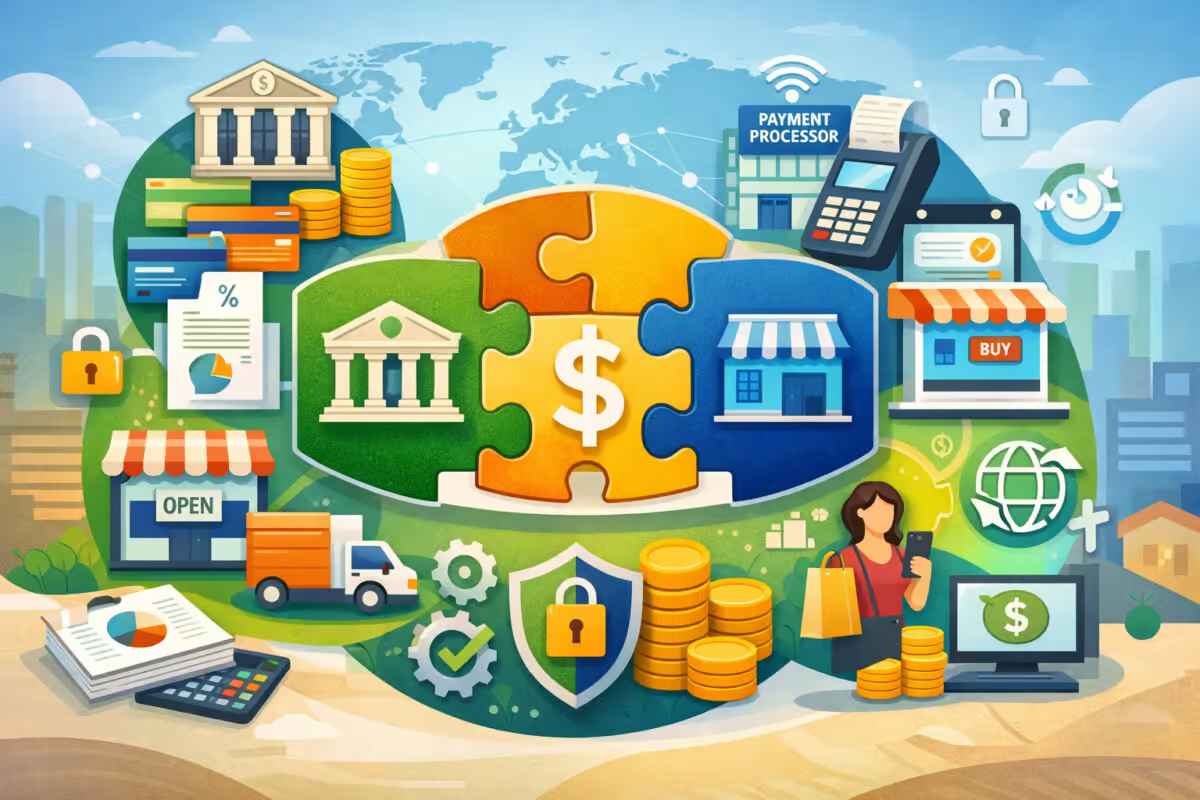
To understand interchange fees, it helps to zoom out and look at the entire payment processing cost structure. Most merchants do not pay only one fee for accepting cards. Instead, they pay several layers of costs that together make up the total merchant discount rate or effective processing expense.
At a high level, card acceptance costs usually break down into three main buckets: interchange, card network fees, and processor markup. Interchange is the fee associated with the issuer side of the transaction.
Card network fees, often called assessments or card network fees, are charged by the card brands and networks that route transactions. Processor markup is the amount added by your merchant service provider, payment facilitator, or acquiring platform for its service, technology, risk management, and support.
This merchant processing fees breakdown matters because each category behaves differently. Interchange is largely non-negotiable at the individual merchant level. Network assessments are also generally fixed according to the card brands’ published schedules.
The most negotiable piece is often the processor markup, along with ancillary fees such as monthly minimums, gateway fees, statement fees, noncompliance charges, or chargeback handling fees.
If you look only at a blended rate, you may miss where your money is really going. A processor may advertise an attractive setup or low markup, but if your business frequently triggers higher interchange categories, your total cost can still be elevated.
On the other hand, a provider with a transparent structure may help you identify ways to reduce interchange costs operationally, even if its markup is not the lowest headline number.
The three main layers of card processing costs
The first layer is interchange fees. These are tied to the issuing bank and the transaction’s characteristics. They are often the largest portion of the cost and can change depending on card type, acceptance method, business category, and data quality.
The second layer is card network fees. These are the assessments and related network charges from the brands that operate the payment rails. They are usually smaller than interchange but still part of the total. Merchants often overlook them because they are less visible in everyday sales conversations, yet they are a real component of the pricing stack.
The third layer is processor markup. This is the provider’s revenue for facilitating the transaction, delivering reporting tools, onboarding, fraud controls, customer support, and account management. Depending on your pricing model, markup may be shown clearly or hidden inside a blended rate.
Beyond those three layers, many businesses also pay additional account-level costs. These can include:
- Payment gateway fees
- PCI compliance or noncompliance fees
- Monthly account fees
- Equipment rental or software fees
- Batch fees
- Chargeback and retrieval fees
- Cross-border or currency conversion fees
Why the total rate is never just one number
A common mistake is assuming there is a single universal rate for card acceptance. In reality, payment processing rates explained properly require looking at transaction mix, average ticket size, sales channels, fraud exposure, and card types accepted.
For example, a retail shop with a large share of chip-inserted debit transactions may have a very different cost structure from an online seller processing manually entered rewards cards.
A B2B distributor that qualifies many transactions for enhanced data treatment may pay differently from a restaurant running consumer credit cards at the counter. Even if those businesses use the same processor, their effective rates can vary significantly.
That is why comparing providers requires more than comparing advertised numbers. You need to know how your transaction mix interacts with the pricing model. A low quoted rate can be misleading if it applies only to a narrow set of “qualified” transactions or excludes common ancillary charges.
For a broader explanation of the fee layers that sit inside card acceptance, this overview of payment processing fees and cost categories is a helpful background. For a more detailed look at ways businesses can review and trim their overall cost stack, this guide to payment processing cost optimization offers practical context.
Who sets interchange rates and why interchange fees exist
A common question from merchants is whether the processor sets interchange. In most cases, the answer is no. Interchange rates are established by the card brands and networks as part of their broader payment rules and operating systems, while the fee itself is generally associated with the issuing side of the transaction.
Your processor does not usually create interchange categories from scratch, even though it may package them into its pricing model.
Interchange exists because card payments involve multiple parties. When a customer uses a card, the issuing bank extends credit or provides access to funds, helps absorb fraud risk, manages cardholder accounts, and participates in authorizing and funding transactions.
The payment system also depends on a network infrastructure that routes transactions between the merchant side and issuer side. Interchange helps support that ecosystem.
From the merchant’s point of view, the purpose may feel less important than the cost. But understanding why interchange exists helps explain why it is structured the way it is.
A lower-risk transaction with richer data and stronger authentication may qualify differently from a higher-risk keyed or online sale. A standard debit card often costs differently from a premium rewards credit card because the economics and risk profiles behind those products are not identical.
That structure also explains why credit card interchange fees are not purely based on your business alone. They reflect a mix of issuer economics, network rules, fraud considerations, card benefits, transaction security, and merchant category factors. So when business owners ask, “What determines interchange rates?” the answer is broader than just processor pricing.
The role of issuers, acquirers, networks, and processors
To follow the flow, it helps to know the players. The cardholder uses a payment card. The issuing bank provides that card and approves or declines the transaction. The merchant accepts the card.
The acquirer or acquiring side supports the merchant’s ability to process card payments. The network routes and governs the transaction rules. The processor or payment provider helps connect the merchant to this system and may also bundle software, support, fraud tools, and reporting.
When a sale happens, information moves through the merchant’s payment setup to the acquiring side, across the network, and to the issuer. If approved, the transaction is later cleared and settled, with funds moving back through the chain after the various fees are allocated. Interchange sits within that settlement process.
This behind-the-scenes flow is why card acceptance costs can look complex. One card payment involves several entities, each with its own role and fee component. Interchange is only one part, but it is central because it directly reflects how a transaction was categorized inside the network’s system.
Why interchange categories vary so much
Interchange schedules are not built as one flat chart for every sale. They include many categories because card transactions do not all carry the same level of risk, value, or processing detail. A swiped fallback transaction may not be treated the same as a chip-read retail transaction.
A manually entered card on a phone order may not be treated the same as a recurring subscription payment. A government purchasing card with enhanced line-item data may qualify differently from a consumer rewards card.
This variation can feel frustrating, but it has a practical effect: your internal payment operations can influence your costs. Better transaction hygiene often means better qualification. That can include cleaner authorization timing, better capture data, AVS usage, correct merchant category coding, timely batching, and card-present optimization where possible.
For merchants, the takeaway is not that they need to master every category. It is that rates exist for reasons, and those reasons connect directly to how your business takes payments. That is where the biggest opportunities for cost control usually begin.
How credit card interchange fees work behind the scenes
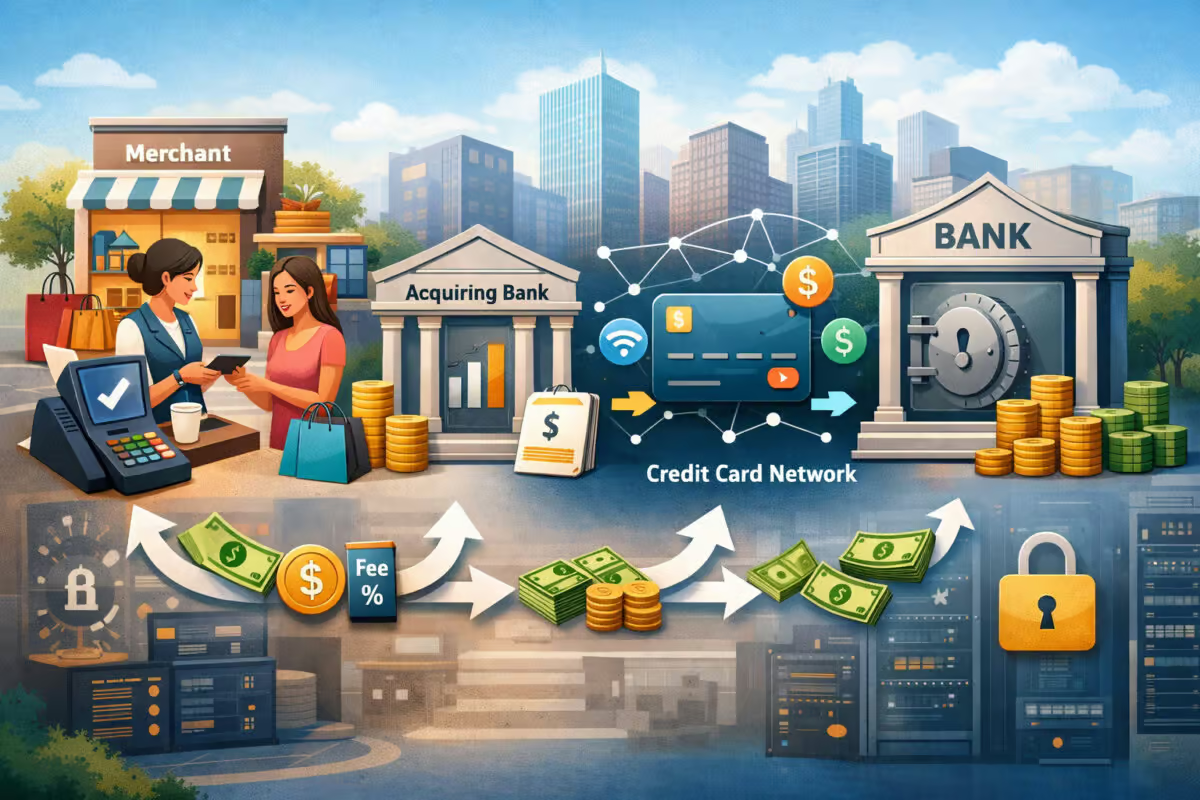
When a customer taps, dips, swipes, or enters card details online, the transaction moves through a fast sequence that most businesses never see. Yet that invisible process determines whether the payment is approved, how the sale is categorized, and what costs will apply after settlement.
It begins with authorization. The merchant’s payment system sends the transaction details through the processor and network to the issuing bank. The issuer reviews available credit or funds, fraud signals, card status, and other risk markers.
If all looks acceptable, it sends back an approval. At that point, the sale is authorized, but the fee picture is not fully final yet.
Next comes clearing and settlement. This is where approved transactions are submitted, grouped, and finalized. The transaction data is reviewed according to card brand rules, merchant category code, acceptance method, and any enhanced information included in the message.
The interchange category is assigned based on those details. Funds then flow through the system, with the merchant receiving the net amount after applicable fees.
This is why certain actions after the initial approval still matter. A transaction can be authorized successfully and still cost more than expected if it was not settled promptly, was missing required data, used a riskier acceptance channel, or failed to qualify for a better interchange category.
For merchants, the sale may feel complete at the point of approval, but from a cost standpoint, what happens during settlement still matters.
Authorization, clearing, and settlement in simple terms
Think of authorization as the quick yes-or-no decision. It checks whether the transaction can go through right now. Clearing and settlement are the accounting and funding steps that happen after the approval, when the transaction is finalized and fees are allocated.
If your business batches transactions late, edits them inconsistently, or omits data fields that matter for qualification, the transaction may land in a more expensive category. This is sometimes described as a downgrade or a failure to qualify for a preferred rate class. While the exact terminology varies by provider, the cost impact is real.
That is why strong transaction workflows matter. The front-end checkout experience is only part of payment performance. The back-end timing and data integrity can influence how much you actually pay.
How transaction details affect the final cost
Several data points can influence where a transaction lands. These may include the merchant category code, the card product, whether the sale was card present or card not present, whether the transaction used a chip, whether AVS was used, whether the sale included tax information, and whether it was settled within the required time frame.
For B2B and B2G merchants, enhanced data can be especially important. Submitting Level 2 or Level 3 details where eligible may help certain transactions qualify for lower interchange treatment. That is one reason businesses with similar sales volume can still have very different effective rates. One may simply be providing better qualifying data than the other.
For more on how enhanced transaction data can help eligible businesses lower costs, these resources on Level 2 and Level 3 processing and the broader guide to Level II and III card data add useful background.
What determines interchange rates for a business
When merchants ask what determines interchange rates, the answer is not one thing. It is a combination of transaction-specific, card-specific, and business-specific factors. That is why interchange fees vary even within the same merchant account.
At the broadest level, networks look at risk, security, economics, and data quality. Lower-risk, more secure, and better-documented transactions tend to receive more favorable treatment than transactions that appear riskier or provide less information. But the real picture gets more detailed.
The most important factors usually include card type, how the card was accepted, your business category, the sales channel, whether the transaction is card present, whether the payment was authenticated properly, whether required data fields were included, how quickly the transaction was settled, and whether the card is a consumer card, business card, debit card, purchasing card, or rewards card.
Because so many factors interact, there is no one-size-fits-all answer. A boutique retailer, dental office, online seller, wholesaler, field service company, and restaurant can all end up with very different effective interchange outcomes even if their gross sales are similar.
That is why payment processing rates explained accurately always start with transaction mix, not a generic headline rate.
Key factors that commonly influence interchange
Below is a practical view of common factors that can influence interchange fees.
| Factor | Lower-Cost Tendency | Higher-Cost Tendency | Why It Matters |
| Card type | Basic debit or standard consumer card | Premium rewards, corporate, purchasing, or some specialty cards | Card products carry different economics and issuer costs |
| Acceptance method | Chip-read or contactless in person | Keyed, mail order, phone order, or e-commerce without strong controls | Card-not-present transactions usually carry more risk |
| Merchant category | Lower-risk everyday retail categories | Higher-risk categories or categories with elevated disputes | Some business types historically generate more loss or fraud |
| Data quality | Complete, timely, accurate transaction data | Missing tax fields, incomplete address data, delayed capture | Better data can improve qualification |
| Settlement timing | Prompt batching and settlement | Delayed settlement or inconsistent capture | Delays can cause downgrades or less favorable categories |
| Security controls | AVS, CVV, tokenization, EMV, strong fraud tools | Weak verification or manual entry without controls | Better controls reduce fraud exposure |
| Ticket characteristics | Predictable sales patterns | Unusual tickets, inconsistent amounts, or high-risk order flow | Transaction behavior can affect risk assessment |
This table does not cover every possible interchange category, but it reflects the main drivers most merchants can actually influence day to day.
Card type and card product matter more than many merchants expect
One major factor is the card itself. Credit card interchange fees often vary by whether the card is debit or credit, consumer or commercial, standard or premium rewards. A merchant may see higher costs simply because more customers choose premium rewards cards or business cards.
That does not mean those cards are bad for your business. Customers may prefer them, and they may support larger-ticket purchases or stronger loyalty behavior. But it does mean your effective rate can rise if your card mix shifts toward products with higher interchange profiles.
For merchants, the key lesson is awareness. If your average transaction cost is creeping up, it may not always be because your processor raised markup. Sometimes your customer card mix changed, your online share grew, or you began accepting more manually entered transactions.
Business category and sales channel shape risk
Your merchant category code helps place your business within the network’s ecosystem. Some categories are treated differently because of fraud patterns, dispute activity, order fulfillment risk, or industry characteristics. An in-person grocery-like transaction may not be priced the same way as an online continuity sale or a high-ticket custom order.
The sales channel matters too. Card-present retail tends to look different from e-commerce, telephone orders, or invoices paid through a virtual terminal.
When the physical card is not present, the risk of fraud or dispute can be higher, so the interchange category often reflects that. If your business has both in-person and remote channels, your blended cost can shift based on which channel generates more volume each month.
Card-present, card-not-present, data quality, and risk level
Some of the most controllable drivers of interchange sit inside everyday transaction habits. That includes whether the card is physically present, whether your system captures the right data, and whether your fraud controls are strong enough for your channel.
A card-present transaction usually means the card or device was physically presented and read through a secure method such as EMV chip or contactless. These transactions often qualify more favorably because they offer stronger evidence that the legitimate cardholder was involved.
A card-not-present transaction includes online, phone, and manually entered payments, which often carry more fraud exposure and therefore more expensive interchange treatment.
Data quality matters because the networks rely on transaction details to classify the sale. When information is incomplete or inconsistent, the transaction may not qualify for the best available category. For some businesses, especially B2B merchants, the difference between sending basic Level 1 data and enhanced Level 2 or Level 3 data can be meaningful.
Risk level ties all of this together. If a transaction looks riskier, the cost is often higher. That can be due to the sales channel, the card product, your business category, missing verification, or a pattern of higher disputes. Understanding this link helps merchants move beyond the idea that fees are arbitrary.
Why card-present optimization can lower costs
Card-present optimization means encouraging the safest, most complete in-person transaction flow possible. In most cases, that includes using chip-capable hardware, accepting contactless payments properly, training staff not to bypass secure methods, and avoiding unnecessary key entry.
When staff manually key transactions because it feels faster, the business can end up paying more. The same thing happens when terminals are outdated, chip fallback is overused, or transactions are not settled promptly after authorization. Those small operational habits can quietly push costs upward.
A simple example is a busy store that frequently keys cards after a terminal issue instead of resolving the hardware problem quickly. Even if sales continue, the business may see a higher effective rate because more transactions fall into less favorable categories.
Better hardware uptime and better cashier procedures can sometimes save more than a small pricing concession.
Why AVS, CVV, and enhanced data matter for remote payments
For card-not-present businesses, verification tools are essential. Address Verification Service, card security code checks, tokenization, fraud filters, and clean customer data help lower risk. They do not eliminate fraud or guarantee a lower rate every time, but they can improve transaction quality and reduce avoidable exposure.
For B2B merchants, enhanced data can be even more important. On eligible transactions, submitting tax amount, customer code, invoice number, purchase order details, and line-item information may help qualify for more favorable interchange treatment.
Businesses that invoice companies, schools, or government entities often overlook this opportunity because their software is not set up correctly or their team does not know what data fields matter.
Interchange pricing model explained: interchange-plus vs flat-rate vs tiered
The interchange pricing model you use changes how clearly you can see costs. It does not usually change the existence of interchange itself, but it changes how that wholesale cost is passed through and how easy it is to understand what you are paying.
With interchange plus pricing, the provider passes through interchange and card network fees, then adds a separate markup.
For example, the markup might be shown as a fixed percentage plus a fixed per-transaction amount above the wholesale cost. This is often considered one of the more transparent structures because it separates variable wholesale costs from provider revenue.
With flat-rate pricing, you pay one blended rate for a broad set of transactions. This is simple and predictable, especially for small businesses or startups that value convenience over detailed analysis.
The downside is that it can hide the underlying cost structure and may become more expensive if your actual transaction profile would otherwise qualify for lower-cost treatment.
With tiered pricing, transactions are grouped into buckets such as qualified, mid-qualified, and non-qualified. While this can sometimes be presented as easy to understand, it often gives the provider broad discretion in how transactions are categorized. That can make statements harder to audit and comparisons harder to trust.
Pricing model comparison
| Pricing Model | How It Works | Main Advantage | Main Drawback | Best Fit |
| Interchange-plus pricing | Wholesale interchange and network fees are passed through, with a separate markup added | Transparent and easier to audit | Monthly cost varies with transaction mix | Businesses that want clarity and room to optimize |
| Flat-rate pricing | One blended rate covers most transactions | Simple and predictable | Can cost more if your true mix is favorable | Small or newer businesses prioritizing simplicity |
| Tiered pricing | Transactions fall into provider-defined buckets | Easy to present in sales conversations | Often opaque and harder to compare fairly | Merchants who understand the tier rules and monitor statements closely |
Why interchange-plus pricing is often preferred for transparency
Interchange plus pricing is popular with merchants who want visibility into the merchant processing fees breakdown. Because the markup is shown separately, you can usually tell whether higher costs came from your provider or from changes in transaction mix. That makes it easier to manage and easier to negotiate.
It also helps you evaluate improvement efforts. If you reduce key entry, increase AVS usage, or capture enhanced commercial card data, the savings may show up more clearly under interchange plus pricing. With flat-rate pricing, some of those wholesale improvements may not flow through to you in the same way.
That said, interchange plus pricing is not automatically best for every business. Some very small merchants prefer flat-rate simplicity because it makes budgeting easier and avoids statement complexity. The right answer depends on your size, average ticket, sales channel mix, and appetite for detailed review.
When flat-rate or tiered pricing may still make sense
Flat-rate pricing can make sense when simplicity is more valuable than squeezing out every basis point. A newer business with modest volume may prefer a predictable structure with fewer moving parts, even if the long-term cost is slightly higher. It can also be convenient for businesses that do not have the time or expertise to monitor statements closely.
Tiered pricing is more complicated. Some merchants operate under it without issue, but it demands careful review. If you cannot clearly see which transactions fall into which tiers and why, it becomes difficult to know whether you are paying fairly. That lack of transparency is why many experienced merchants prefer interchange-plus pricing when possible.
In short, the pricing model affects both cost and control. A business that wants more insight into what determines interchange rates and how those rates hit its statement will usually have an easier time under a transparent model.
Why different businesses pay different processing rates
Many merchants compare notes with peers and are surprised that the numbers do not match. One owner hears about a low rate from a friend and assumes the same deal should apply to every business. But card acceptance costs are highly dependent on transaction mix, business type, and pricing structure, so apples-to-apples comparisons are rare.
A medical office, restaurant, online apparel seller, industrial distributor, nonprofit, and home service company may all accept cards, yet their cost profiles can be very different. The office may run many card-on-file payments.
The restaurant may see a high share of in-person consumer cards. The online seller may face more fraud screening and more card-not-present exposure. The distributor may process larger tickets using commercial cards and enhanced data. Each of those patterns influences interchange fees and total cost.
Average ticket size also plays a role. Because many transactions include both a percentage fee and a fixed authorization component, the economics of a small-ticket environment are different from those of a high-ticket environment. Monthly volume matters too, especially when negotiating processor markup or deciding which pricing model makes the most sense.
What this means in practice is simple: there is no universal “good rate” without context. A low effective rate for one business might be unrealistic for another based on risk, sales channel, and customer payment habits. The smarter question is whether your rates make sense for your own profile and whether your setup is helping or hurting qualification.
Business examples that show why rates vary
Consider a retail clothing boutique that processes mostly chip and contactless payments in person. Many transactions are consumer cards, and staff settle batches consistently. That merchant may enjoy a relatively efficient cost structure because the transactions are card present and security is strong.
Now compare that to a home improvement contractor collecting deposits over the phone and final payments through emailed invoices. Even if the provider markup is similar, the contractor may pay more because the share of card-not-present activity is higher and the transaction risk is different.
Next, consider a wholesaler selling to companies and government agencies. If it submits enhanced Level 2 or Level 3 data on eligible commercial card transactions, it may be able to reduce interchange costs despite larger ticket sizes.
If it fails to capture that data, it may pay more than necessary. Same industry, same customers, but very different outcome depending on the setup.
The role of operational discipline in rate outcomes
Many merchants assume their rates are determined mostly when they sign the contract. In reality, day-to-day habits play a major role. Outdated terminals, inconsistent staff training, weak address verification, late batching, and incomplete invoice data can all raise effective costs.
That is why rate management is partly an operational issue. The provider matters, but so do your workflows. A business that treats payments as a back-office afterthought may leave money on the table even with a good pricing model.
A business that reviews statements, monitors downgrades, and keeps acceptance practices tight may produce a better outcome under the same headline contract.
If you want to know whether your pricing still fits your business, compare your current mix to the assumptions behind your original setup. Growth into online channels, more manual invoices, more commercial cards, or a shift toward higher-ticket sales can all change what “good pricing” looks like.
How to read and understand interchange costs on merchant statements
Merchant statements often look intimidating because they combine dozens of terms, categories, and charge types into a single document. The good news is that you do not need to understand every code to get useful insight. You just need to know what to look for.
Start with the big picture. Compare total processing fees for the period to total processed card volume. That gives you an effective rate. Track that over time instead of focusing only on isolated line items.
If the effective rate rises, ask whether the cause was more expensive card mix, more card-not-present sales, downgrades, or a provider fee change.
Next, separate wholesale costs from provider markup where possible. On an interchange plus pricing statement, interchange categories and card network fees are often listed separately from the processor’s discount or markup charges.
On a flat-rate or tiered statement, the breakdown may be less clear, so you may need help from the provider or a detailed statement review to understand what is happening underneath.
Also look for recurring non-transaction charges. Sometimes a business fixates on interchange while ignoring monthly software, compliance, equipment, gateway, or batch fees that materially affect the total account cost. A strong statement review looks at both per-transaction economics and account-level fees.
Statement items worth reviewing closely
When reviewing statements, pay special attention to:
- Total volume and total fees
- Effective rate trend over time
- Interchange categories or bundled rate buckets
- Card network fees and assessments
- Processor markup or discount charges
- Batch fees and monthly account charges
- Gateway, software, or platform fees
- Chargeback-related fees
- PCI compliance or noncompliance charges
If you are on interchange plus pricing, check whether your markup stayed consistent. If it did, but your total cost rose, your mix may have changed. If your markup changed unexpectedly or ancillary fees grew, that is a provider conversation.
Also watch for patterns that suggest downgrades or poor qualification. While labels vary, signs can include an unusual share of higher-cost categories, unexplained non-qualified volume, or line items that appear when transactions are settled late or submitted with incomplete data.
How to tell when your statement needs a deeper review
You may need a deeper review if your effective rate keeps rising, if your provider cannot explain line items clearly, or if your business model has changed since the account was set up. A restaurant expanding into online ordering, a service business moving to invoices, or a wholesaler taking more purchasing cards may all outgrow the assumptions behind the original pricing arrangement.
A deeper review is also worthwhile when:
- You cannot tell the difference between interchange, assessments, and markup
- You suspect frequent downgrades
- Your batch and settlement process is inconsistent
- You have added a new sales channel
- Your monthly volume has grown enough to justify negotiation
For a general primer on how interchange is calculated and why it shows up the way it does, this article on how interchange fees are calculated is a useful companion read.
Practical strategies to reduce interchange costs without hurting sales
Reducing costs does not mean making checkout harder for customers. The best savings usually come from better qualification, cleaner transaction data, stronger verification, and a pricing model that lets wholesale improvements flow through to you.
One of the most effective tactics is card-present optimization. If you operate in person, keep terminals current, use chip and contactless properly, and minimize key entry. Staff should understand when manual entry is appropriate and when it is an avoidable shortcut that raises cost and risk.
Another major tactic is AVS and verification discipline for remote payments. For keyed, invoice, or online transactions, use address verification, CVV where appropriate, tokenization, and fraud filters.
These tools do not guarantee lower cost on every sale, but they can improve transaction quality and reduce losses tied to disputes and fraud.
For B2B and B2G merchants, Level 2 and Level 3 data are among the strongest opportunities. If you accept corporate, purchasing, or government cards, work with your gateway, ERP, or processor to capture and transmit the necessary fields. This may include tax amount, customer code, invoice number, line-item detail, and other enhanced data elements.
Timely batching and settlement also matter. Transactions should be settled promptly and consistently. Delays can trigger less favorable treatment, especially if authorization ages out or required timelines are missed.
Cost-saving tactics merchants often overlook
Many savings opportunities are operational, not contractual. Common examples include:
- Fixing terminal issues that cause unnecessary key entry
- Training staff to use the lowest-risk acceptance method available
- Turning on AVS for manually entered and invoice payments
- Setting recurring billing correctly rather than re-keying cards each time
- Updating gateway settings so commercial card fields are not lost
- Reviewing settlement timing and batch cutoffs
- Cleaning up customer billing address capture on checkout forms
- Verifying that your merchant category code accurately reflects your business
These changes may sound small, but together they can improve the payment processing cost structure over time. They also tend to reduce fraud exposure, which helps protect more than just interchange.
When it makes sense to negotiate or change pricing models
Negotiation makes sense when your volume has grown, your business profile has stabilized, or your current statement is hard to understand. It also makes sense if you are paying a flat rate that was convenient early on but no longer reflects your scale or mix.
Switching pricing models may be worth considering when:
- Your monthly card volume has increased significantly
- You want clearer reporting on wholesale versus markup
- You are processing more commercial cards and want savings to pass through
- You suspect tiered pricing is masking true costs
- Your business now has enough consistency to benefit from a more tailored setup
That does not mean every merchant should rush into a change. Some smaller businesses still prefer flat-rate simplicity. But if you want deeper cost control, interchange plus pricing often provides better visibility into whether your operational improvements are actually reducing interchange fees.
Common misunderstandings about interchange fees
Interchange fees generate a lot of myths because the payment system is complex and providers often simplify the conversation during sales. Clearing up those misunderstandings can save businesses from bad decisions.
One common myth is that interchange is the same as the processor’s markup. It is not. Interchange is part of the wholesale transaction cost structure, while markup is the provider’s added fee. Mixing those together makes it much harder to compare offers or understand what changed on your statement.
Another myth is that the cheapest quoted rate is always the best deal. A provider can quote a low number that applies only to ideal transactions while your real mix lands in higher-cost categories.
A transparent structure with a slightly higher stated markup may produce a better outcome if it matches your business and avoids hidden tiering.
Some merchants also believe interchange fees are completely uncontrollable. While you usually cannot set interchange itself, you can influence how transactions qualify. Acceptance method, data quality, verification, batching, and pricing model all affect whether you are paying more than necessary.
Misunderstanding: “My processor controls all of my rates”
Your processor controls some things, but not everything. It can control markup, account fees, statement format, and the tools available to help you qualify transactions better. It does not normally invent the core interchange categories themselves.
This distinction matters because it changes the right response. If costs are rising because your mix shifted toward premium cards and online sales, the solution may not be a processor switch alone.
It may involve channel-specific optimization, better fraud controls, or a different pricing model. If costs are rising because markup and account fees increased, then the provider relationship deserves closer scrutiny.
In other words, the right fix depends on where the cost increase came from. That is why visibility matters so much.
Misunderstanding: “Interchange-plus pricing is always cheaper”
Interchange plus pricing is often more transparent, but not always cheaper in every situation. A very small merchant with limited volume may find flat-rate pricing easier and roughly comparable in cost once account fees and complexity are considered.
The real strength of interchange plus pricing is visibility. It shows the interchange pricing model more clearly, making it easier to see whether your transaction quality is improving and whether the provider’s markup is reasonable. For many growing businesses, that clarity becomes more valuable over time.
The important point is to match the pricing model to the business. Transparency, simplicity, predictability, and optimization all matter. No single structure wins every time.
Frequently Asked Questions
Conclusion
Interchange fees are one of the most important moving parts inside card acceptance costs, and understanding them gives business owners more control over margins. Once you see how interchange fits into the full payment processing cost structure, the statement becomes less mysterious and your options become clearer.
The key takeaway is that processing costs are shaped by more than a provider quote. Card type, business category, acceptance method, data quality, risk level, batching habits, and pricing model all influence what you ultimately pay.
That is why what determines interchange rates is not just who your processor is, but how your business actually processes transactions every day.
The good news is that many cost drivers are manageable. Cleaner card-present procedures, stronger remote-payment verification, enhanced B2B data, consistent settlement, and better statement review can all help reduce interchange costs over time.
Add a pricing model that gives you visibility, and you put yourself in a much stronger position to control expenses instead of simply reacting to them.
If you accept cards regularly, this is worth paying attention to. Interchange fees may be behind the scenes, but the impact shows up directly in your bottom line.