

When starting a business in the United States, one of the first steps is to obtain an Employer Identification Number (EIN). An Employer Identification Number is a unique nine-digit number assigned by the Internal Revenue Service (IRS) to identify a business entity for tax purposes. It is often referred to as a business’s social security number. Understanding the process and timeline for obtaining an EIN is crucial for entrepreneurs and business owners.
In this comprehensive article, we will delve into the purpose and benefits of an Employer Identification Number, provide a step-by-step guide on how to apply for one, explore different methods to obtain an EIN, discuss factors that may affect the processing time, and offer tips to expedite the application process. We will also address potential issues and solutions when facing delays in obtaining an Employer Identification Number, and answer common FAQs about the process.
Understanding the purpose and benefits of an EIN

An EIN serves as a unique identifier for a business entity, allowing the IRS to track its tax obligations. It is required for various purposes, including filing tax returns, opening a business bank account, hiring employees, and applying for business licenses and permits. Additionally, an Employer Identification Number provides credibility and professionalism to a business, as it is often requested by vendors, partners, and financial institutions.
Step-by-step guide on how to apply for an EIN

Applying for an EIN is a relatively straightforward process. Here is a step-by-step guide to help you navigate through it:
1. Determine eligibility: Before applying for an Employer Identification Number, ensure that you are eligible. Generally, businesses with a principal location in the United States or its territories can apply for an EIN. Certain non-resident individuals and foreign entities may also be eligible.
2. Gather required information: To complete the application, you will need to provide certain information about your business, such as the legal name, trade name (if applicable), mailing address, type of entity (e.g., sole proprietorship, partnership, corporation), and the reason for applying (e.g., starting a new business, hiring employees).
3. Choose the application method: The IRS offers three methods to apply for an Employer Identification Number: online, by mail, or by fax. The online application (Form SS-4) is the most convenient and fastest method, while the mail and fax options may take longer.
4. Complete the application: Fill out the application form accurately and thoroughly. Double-check all the information before submitting to avoid delays or rejections.
5. Submit the application: If applying online, submit the form electronically. If applying by mail or fax, print and sign the completed form before sending it to the appropriate IRS address or fax number.
6. Wait for processing: The IRS will review your application and assign an EIN if everything is in order. The processing time varies depending on the method chosen and other factors, which we will discuss in detail later.
Exploring the different methods to obtain an EIN
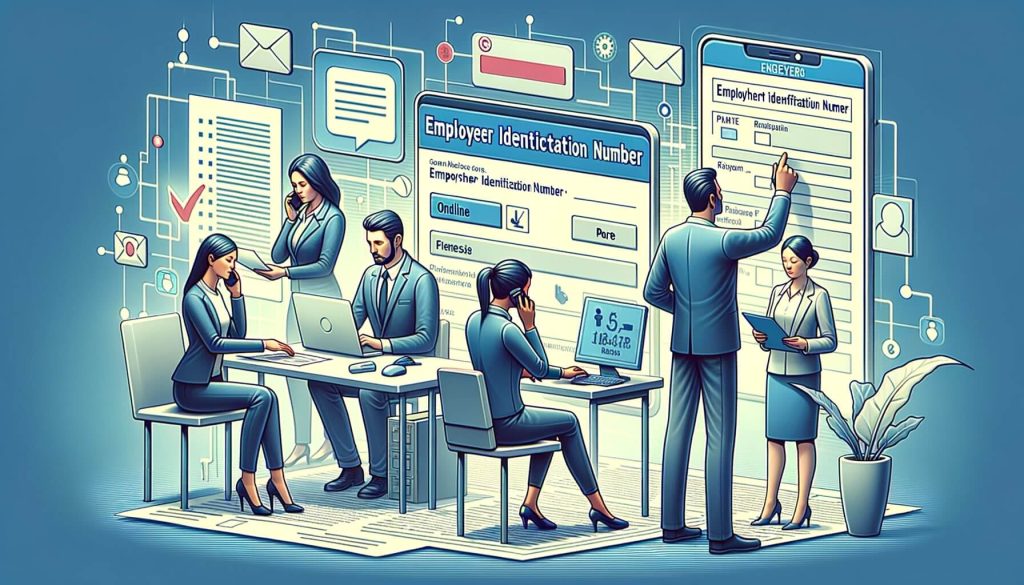
As mentioned earlier, there are three methods to obtain an Employer Identification Number: online, by mail, or by fax. Let’s explore each method in detail:
1. Online application: The online application is the most popular and efficient method to obtain an EIN. It is available on the IRS website and can be completed in real-time. The system guides you through a series of questions, and once you submit the form, you will receive your Employer Identification Number immediately. This method is available 24/7 and is recommended for most businesses.
2. Mail application: If you prefer to apply by mail, you can download Form SS-4 from the IRS website, fill it out manually, and mail it to the appropriate IRS address. The processing time for mail applications is longer compared to the online method. It may take up to four weeks to receive your Employer Identification Number.
3. Fax application: Similar to the mail application, you can download Form SS-4, fill it out manually, and fax it to the appropriate IRS fax number. The processing time for fax applications is also longer compared to the online method. It may take up to four business days to receive your EIN.
Factors that may affect the processing time of an EIN application

Several factors can influence the processing time of an EIN application. Understanding these factors can help manage expectations and plan accordingly. Here are some key factors to consider:
1. Application method: As discussed earlier, the method chosen to apply for an Employer Identification Number can significantly impact the processing time. Online applications are generally processed faster compared to mail or fax applications.
2. Time of year: The time of year can affect the processing time due to fluctuations in the volume of applications received by the IRS. For example, during peak tax season (January to April), the processing time may be longer compared to other months.
3. Accuracy of information: Providing accurate and complete information in the application is crucial. Any errors or missing information can lead to delays or rejections, requiring additional time to rectify the issues.
4. IRS workload: The IRS workload can vary, affecting the processing time of EIN applications. Factors such as changes in tax laws, government shutdowns, or other external factors can impact the IRS’s ability to process applications promptly.
5. Complexity of the application: The complexity of the business entity or the nature of the application can also influence the processing time. For example, applications for certain types of entities, such as trusts or non-profit organizations, may require additional scrutiny and take longer to process.
How long does it typically take to receive an Employer Identification Number?
The processing time for an EIN application can vary depending on the factors mentioned above. However, on average, the processing time is relatively quick. Here is a breakdown of the typical processing times for each application method:
1. Online application: The online application is the fastest method to obtain an EIN. In most cases, you will receive your Employer Identification Number immediately after submitting the application.
2. Mail application: If you choose to apply by mail, the processing time is longer compared to the online method. It may take up to four weeks to receive your Employer Identification Number after the IRS receives your application.
3. Fax application: Similar to the mail application, the processing time for fax applications is longer compared to the online method. It may take up to four business days to receive your EIN after the IRS receives your application.
Tips to expedite the Employer Identification Number application process
While the processing times mentioned above are typical, there are several tips you can follow to expedite the EIN application process. Here are some helpful suggestions:
1. Apply online: As mentioned earlier, the online application is the fastest method to obtain an EIN. By applying online, you can receive your Employer Identification Number immediately, saving time and effort.
2. Double-check information: Before submitting the application, double-check all the information to ensure accuracy and completeness. Any errors or missing information can lead to delays or rejections.
3. Use a reliable internet connection: If applying online, make sure you have a stable and reliable internet connection. This will prevent any disruptions during the application process and ensure a smooth experience.
4. Apply during off-peak periods: To avoid potential delays caused by high application volumes, consider applying during off-peak periods. Avoid peak tax season (January to April) and other busy periods to increase the chances of a faster processing time.
5. Follow up if necessary: If you have not received your EIN within the expected processing time, consider following up with the IRS. You can contact the IRS Business and Specialty Tax Line for assistance.
Potential issues and solutions when facing delays in obtaining an EIN
While the majority of Employer Identification Number applications are processed smoothly and within the expected timeframes, there can be instances where delays occur. Here are some potential issues you may encounter and their solutions:
1. Missing or incorrect information: If the IRS identifies missing or incorrect information in your application, they may request additional documentation or clarification. To resolve this issue, promptly provide the requested information to the IRS.
2. Rejected application: In some cases, the IRS may reject your application due to errors or inconsistencies. If this happens, carefully review the rejection notice and correct any mistakes before resubmitting the application.
3. Name conflict: If the name you have chosen for your business is already in use by another entity, the IRS may reject your application. To avoid this issue, conduct a thorough search to ensure your chosen name is unique and not already registered.
4. IRS backlog or delays: Occasionally, the IRS may experience backlogs or delays in processing applications due to high volumes or other factors. If you suspect your application is delayed, consider contacting the IRS for an update or to inquire about the status of your application.
Common FAQs
Q1. Is an EIN required for all businesses?
While an Employer Identification Number is not required for all businesses, it is generally recommended for most business entities. Sole proprietors without employees can use their Social Security Number (SSN) for tax purposes, but obtaining an EIN provides additional benefits and separates personal and business finances.
Q2. Can I apply for an EIN if I am a non-resident or a foreign entity?
Yes, non-resident individuals and foreign entities can apply for an EIN if they have a valid reason, such as conducting business in the United States or hiring employees. The application process may have additional requirements, so it is advisable to consult the IRS guidelines or seek professional assistance.
Q3. Can I use my EIN immediately after receiving it?
Yes, you can use your Employer Identification Number immediately after receiving it. It is important to keep a record of your EIN and use it for all tax-related purposes, such as filing tax returns, opening a business bank account, or applying for licenses and permits.
Q4. Can I change my EIN if my business structure changes?
In most cases, you cannot change your EIN if your business structure changes. If you undergo a significant change, such as converting from a sole proprietorship to a corporation, you will need to apply for a new EIN.
Q5. Is there a fee to obtain an EIN?
No, obtaining an Employer Identification Number is free of charge. The IRS does not charge any fees for processing EIN applications.
Conclusion
Obtaining an EIN is an essential step when starting a business in the United States. Understanding the purpose and benefits of an Employer Identification Number, as well as the process and timeline for obtaining one, is crucial for entrepreneurs and business owners. By following the step-by-step guide provided in this article, exploring different application methods, considering factors that may affect processing time, and following the tips to expedite the application process, you can obtain your EIN efficiently.
In case of any delays or issues, it is important to address them promptly and seek assistance from the IRS if necessary. With an Employer Identification Number in hand, you can confidently navigate the tax obligations and financial aspects of your business, setting a solid foundation for success.